For years, real estate conversations focused almost entirely on location, pricing, and floor plans. But behind every successful residential or commercial project lies something far less visible — how efficiently the property is managed after construction. From maintaining common areas to handling utilities, security, and repairs, facility management plays a crucial role in a building’s long-term value.
Today, builders are increasingly turning to digital facility management to streamline operations, reduce costs, and deliver better living experiences. What was once managed through spreadsheets, phone calls, and manual inspections is now being powered by innovative platforms, real-time dashboards, and data-driven decision-making.
This shift isn’t just improving backend efficiency for developers — it’s reshaping how buyers perceive quality, reliability, and trust in modern real estate projects.
What Is Digital Facility Management?
At its core, digital facility management leverages software platforms, sensors, automation tools, and data analytics to efficiently manage and maintain real estate assets.
Instead of reactive maintenance and fragmented vendor coordination, digital systems allow builders and facility managers to:
- Monitor building systems in real time
- Schedule preventive maintenance
- Track service requests digitally
- Manage vendors and contracts in one place
- Optimise utility usage and energy consumption
For builders handling multiple projects or large townships, this shift is no longer optional — it’s becoming a necessity.
Why Traditional Facility Management Falls Short
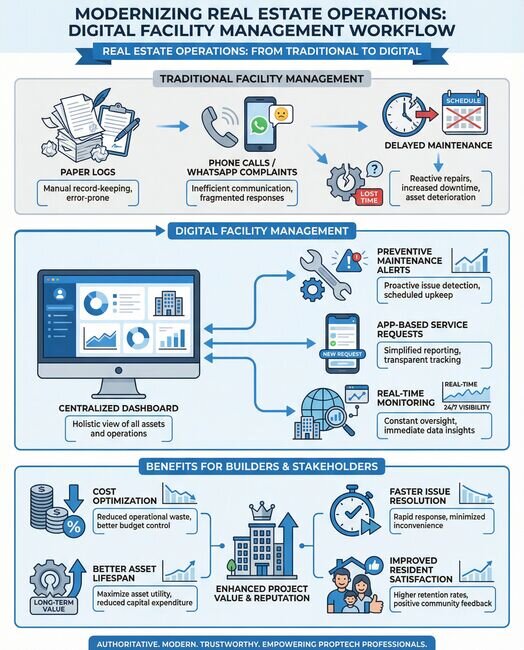
Before digital adoption, most builder operations relied heavily on manual processes:
- Maintenance logs are maintained on paper
- Resident complaints are routed through calls or WhatsApp
- Delayed response times due to a lack of visibility
- No central data on recurring issues or asset health
While this may work for smaller buildings, it becomes unmanageable at scale. As projects grow larger and more complex, inefficiencies compound — increasing operational costs and impacting resident satisfaction.
Digital systems solve this by bringing structure, accountability, and transparency into daily operations.
How Builders Use Digital Facility Management to Streamline Operations
1. Centralised Operations Across Projects
Large developers often manage multiple residential and commercial properties simultaneously. Digital facility management platforms provide a single dashboard where builders can view:
- Asset status across locations
- Maintenance schedules
- Vendor performance
- Cost tracking and budgeting
This centralisation enables leadership teams to make informed decisions instead of relying on fragmented updates from individual sites.
2. Preventive Maintenance Instead of Firefighting
One of the most significant advantages of digital facility management is its predictive and preventive maintenance capabilities.
Innovative systems track equipment usage, performance trends, and service history. Builders can identify early signs of wear in elevators, HVAC systems, water pumps, or electrical infrastructure — fixing issues before breakdowns occur.
This not only reduces emergency repair costs but also extends asset lifespan, protecting long-term project value.
3. Faster Issue Resolution and Better Resident Experience
For residents, the difference is immediately noticeable. Digital platforms allow:
- App-based service requests
- Automated ticket generation
- Real-time status updates
- Faster response and closure times
From a builder’s perspective, this improves brand trust and post-handover satisfaction — factors that strongly influence referrals and future sales.
4. Data-Driven Cost Optimisation
Facility management costs often escalate quietly over time. Without precise data, builders struggle to identify inefficiencies.
With digital facility management solutions, builders gain visibility into:
- Energy and water usage patterns
- Vendor-wise cost breakdowns
- High-frequency maintenance issues
- Budget vs actual spend
This data allows builders to renegotiate contracts, optimise resource usage, and plan budgets more accurately.
5. Smarter Utility and Energy Management
Rising energy costs and sustainability expectations have pushed builders to adopt more innovative utility management.
Digital systems integrate with:
- Smart meters
- Energy monitoring tools
- Water usage sensors
By tracking consumption trends, builders can reduce wastage, ensure compliance with sustainability standards, and enhance the overall efficiency of builder operations.
Why Digital Facility Management Matters to Property Buyers
While buyers may not interact directly with facility management software, they experience its outcomes daily.
Projects backed by strong digital facility management typically offer:
- Well-maintained common areas
- Fewer service disruptions
- Transparent maintenance processes
- Better resale and rental appeal
For investors, this translates to lower vacancy risk and higher long-term returns. For end users, it means peace of mind and a consistent quality of life.
This is why modern buyers increasingly look beyond brochures and ask more profound questions about post-handover management.
Digital Facility Management as a Competitive Advantage for Builders
In crowded real estate markets, differentiation is no longer just about design or amenities. Builders who invest in digital operations stand out in several ways:
- Stronger operational control
- Higher resident satisfaction
- Better compliance and reporting
- Long-term asset value protection
Over time, this operational maturity becomes part of the builder’s brand identity — something savvy buyers and institutional investors actively seek.
The Growing Role of Technology in Builder Operations
The future of builder operations is deeply tied to technology. Digital facility management is now integrating with:
- IoT-based sensors
- AI-driven maintenance alerts
- Automated reporting tools
- Resident experience platforms
As real estate moves towards smarter cities and connected communities, builders who adapt early will have a clear advantage.
Where Proppy Fits Into This Ecosystem
Understanding how a property will be managed after purchase is just as important as choosing the correct location or price point. Yet, this information is often overlooked or poorly communicated.
Proppy bridges this gap by helping buyers look beyond surface-level details. Through data-backed insights, verified project information, and market intelligence, Proppy enables homebuyers to evaluate projects holistically — including operational quality and long-term livability.
Instead of guessing which project will age well, buyers can make decisions rooted in clarity and confidence.
Final Thoughts
The shift toward digital facility management is redefining how builders approach real estate operations. What was once reactive and fragmented is becoming structured, predictive, and data-driven.
For builders, this means streamlined builder operations, reduced costs, and stronger brand credibility. For buyers, it results in better living experiences and more reliable long-term value.
As technology continues to shape real estate, understanding what happens after handover will be just as critical as choosing the right property in the first place.
Proppy Insights helps home buyers make confident decisions with data-backed comparisons, verified project details, and local market intelligence. Get a personalised shortlist of projects that match your budget and lifestyle, along with expert guidance on pricing, resale potential, and growth prospects — so you choose right the first time.
Talk to a Proppy expert today.
Frequently Asked Questions:
Digital facility management is the use of technology platforms to manage, monitor, and maintain real estate assets efficiently. It replaces manual processes with digital systems for maintenance tracking, utility management, vendor coordination, and issue resolution, helping builders run properties more smoothly after construction.
For builders, digital facility management simplifies daily builder operations by centralising data, reducing manual work, and enabling preventive maintenance. It helps control costs, improve response times, and maintain consistent quality across multiple projects or large developments.
Yes. Projects managed through structured digital systems tend to have better upkeep, fewer operational issues, and stronger resident satisfaction. Over time, this positively influences resale value, rental demand, and long-term asset performance, making the property more attractive to buyers and investors.
Traditional maintenance is usually reactive — issues are addressed only after complaints or breakdowns occur. Digital facility management focuses on proactive and preventive maintenance, using data and real-time monitoring to identify problems early and avoid disruptions.
While large builders benefit significantly due to scale, even mid-sized developers use digital facility management solutions to improve operational efficiency, standardise processes, and deliver a better living experience. As technology becomes more accessible, adoption is increasing across all builder segments.
Digital systems help track energy and water usage, identify wastage, and optimise consumption. This supports sustainable building practices while also reducing operational costs a growing priority in modern builder operations.
Buyers can ask developers about post-handover maintenance systems, service request processes, and utility monitoring tools. Platforms like Proppy help buyers evaluate projects beyond surface details by offering verified insights into project quality and long-term livability.
Facility management affects everyday living — from clean common areas to reliable utilities and timely repairs. Strong digital facility management ensures smoother operations, fewer surprises after possession, and better long-term value for homeowners.
digital facility management digital facility management in real estate modern real estate digital facility management real estate builder operations
Last modified: January 22, 2026