
For decades, property search followed a familiar pattern. Buyers would scroll endlessly through listings, visit multiple sites, speak to brokers, and still feel unsure whether they were making the right choice. Information was scattered, comparisons were difficult, and decisions were often driven by instinct rather than insight.
Today, that process is undergoing a quiet but powerful shift.
The rise of generative AI real estate solutions is transforming how people discover, compare, and decide on properties. Instead of simply showing listings, technology is now helping buyers think better — by analysing preferences, predicting outcomes, and simplifying complex choices. This evolution marks a major leap forward in property technology, especially in fast-moving markets like Bangalore.
What Is Generative AI in Real Estate?
Generative AI refers to systems that don’t just retrieve information but create insights. Unlike traditional search tools that rely on fixed filters, generative AI understands patterns, context, and intent.
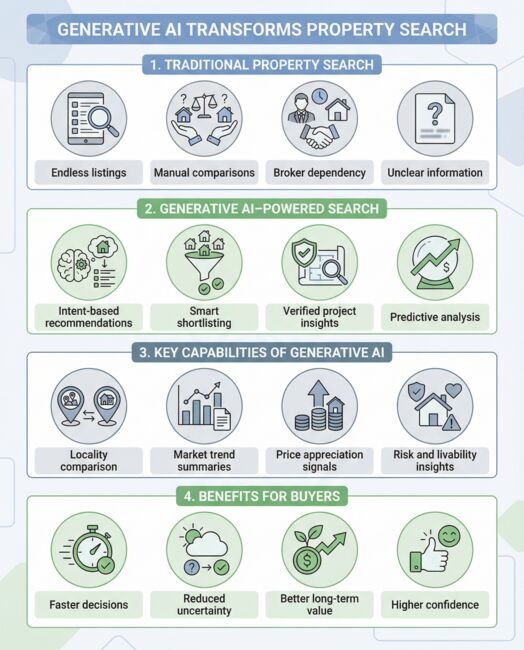
In the real estate ecosystem, generative AI real estate platforms can:
- Interpret buyer needs beyond surface-level filters
- Generate personalised property shortlists
- Summarise market trends in plain language
- Compare localities based on growth, livability, and risk
- Predict future price movement using historical and live data
This is a significant upgrade from static listing portals. Instead of asking buyers to “figure it out,” AI-led platforms assist them through every decision stage.
Why Traditional Property Search Falls Short
Before understanding the impact of AI, it’s worth looking at the challenges buyers commonly face:
- Hundreds of listings with little context
- No clarity on which projects are genuinely verified
- Conflicting opinions from brokers and online reviews
- Difficulty comparing two similar localities objectively
- Lack of insight into future appreciation or resale potential
In cities like Bangalore, where micro-markets behave very differently, these gaps can lead to costly mistakes. This is where modern property technology becomes essential rather than optional.
How Generative AI Is Reshaping Property Discovery
1. From Filters to Intent-Based Search
Earlier, property searches were driven by rigid filters—budget, BHK, location. While helpful, these filters rarely captured the whole picture.
Generative AI goes deeper. It understands why someone is searching. For example:
- A family prioritising schools and commute
- An investor looking for property appreciation potential
- A first-time buyer balancing EMI comfort and future resale
By analysing behaviour and preferences, AI-powered real estate platforms generate recommendations that feel intuitive rather than generic.
2. Smarter Locality Comparisons
One of the most potent applications of generative AI in real estate is locality intelligence.
Instead of vague statements like “Area A is upcoming,” AI can compare:
- Infrastructure readiness
- Water availability and civic planning
- Office corridor proximity
- Historical price movement
- Supply vs demand dynamics
This allows buyers to understand why Sarjapur Road may behave differently from HSR Layout — not just today, but five years from now.
3. Turning Data Into Clear Insights
Real estate data is complex. Raw numbers don’t help most buyers.
Generative AI translates dense datasets into:
- Easy-to-read summaries
- Pros and cons lists
- Scenario-based insights (best-case vs realistic outcomes)
This is where property technology truly adds value — by making expert-level insights accessible to everyday buyers.
Personalisation at Scale: A Game Changer
No two buyers are alike. Yet, traditional platforms often treat them the same.
Generative AI enables hyper-personalised property discovery by learning from:
- Search behaviour
- Budget flexibility
- Lifestyle priorities
- Preferred builders and layouts
The result is a shortlist that feels curated rather than random.
For example, a buyer exploring both Whitefield and North Bangalore might receive different insights based on commute tolerance, investment horizon, or rental expectations. This level of precision is only possible through advanced AI-driven real estate search systems.
Verified Projects and Trust-Led Decisions
One of the most significant pain points in property buying is trust.
Generative AI doesn’t replace verification — it strengthens it. By integrating verified data sources, builder track records, and regulatory information, AI-powered platforms help buyers:
- Avoid misleading listings
- Identify credible developers
- Understand project readiness and risks
This trust layer is becoming a core pillar of modern property technology, especially for first-time buyers.
Predictive Insights: Looking Beyond Today
The most exciting aspect of generative AI real estate is its predictive ability.
Instead of asking, “Is this a good area now?”, buyers can explore:
- Likely price movement over the next 3–7 years
- Impact of upcoming infrastructure projects
- Long-term rental demand trends
These forward-looking insights help buyers align property decisions with life goals — whether that’s upgrading, investing, or planning for children’s education.
Bangalore: A Perfect Use Case for AI-Led Property Search
Bangalore’s real estate market is dynamic, fragmented, and highly localised. Micro-markets can behave differently even within a few kilometres.
In such an environment, AI-powered property search in Bangalore becomes especially valuable. Generative AI can:
- Compare emerging corridors with established ones
- Highlight infrastructure-led growth zones
- Identify undervalued pockets before prices surge
For buyers navigating Bangalore’s complexity, AI acts as a decision partner rather than a listing engine.
How Proppy Is Applying Generative AI Thoughtfully
Proppy isn’t just adopting AI for the sake of technology. It uses generative AI real estate principles to simplify decision-making without overwhelming buyers.
Proppy goes beyond listings by offering:
- Data-backed property comparisons
- Verified project information
- Local market intelligence tailored to buyer needs
- AI-assisted shortlisting that reflects real preferences
The focus remains human-first — using technology to remove confusion, not add to it.
The Human Side of AI in Property Decisions
There’s a common misconception that AI removes the human element. In reality, it does the opposite.
By handling complex analysis and repetitive comparisons, AI frees buyers to focus on what truly matters:
- Lifestyle fit
- Financial comfort
- Long-term peace of mind
The best property technology platforms combine AI intelligence with human guidance — ensuring decisions feel informed, not automated.
What the Future Looks Like
As generative AI real estate continues to evolve, property search will become:
- More conversational
- More predictive
- More transparent
Buyers will expect platforms to understand them, not just serve data. The future belongs to solutions that blend intelligence, trust, and empathy — especially in high-stakes decisions like buying a home.
Final Thoughts
Generative AI is not replacing real estate expertise — it is enhancing it. By turning fragmented information into meaningful insights, property technology is helping buyers move from doubt to clarity. In a market as complex as Bangalore, this shift is not just welcome — it’s necessary.
Proppy Insights helps home buyers make confident decisions with data-backed comparisons, verified project details, and local market intelligence. Get a personalised shortlist of projects that match your budget and lifestyle, along with expert guidance on pricing, resale potential, and growth prospects — so you choose right the first time. Talk to a Proppy expert today.
Last modified: January 18, 2026