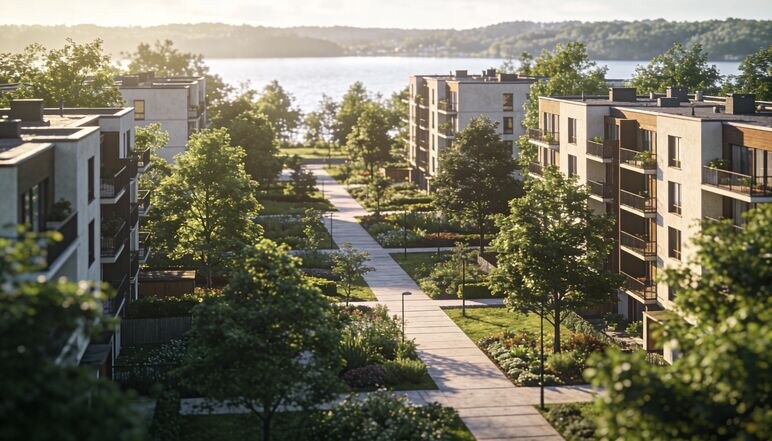
Bangalore has always been a city of contradictions. Glass office towers rise next to century-old trees. A tech park hums with activity just a few streets away from a quiet lake where morning walkers gather. Over the last decade, as the city expanded rapidly, one question began surfacing more often among homebuyers: Can Bangalore grow without losing its green soul?
That question has shaped a new chapter in the city’s real estate story—one focused on sustainable Bangalore and thoughtfully designed eco-friendly homes.
Today, sustainability is no longer a niche concept reserved for luxury villas or experimental projects. It has entered mainstream homebuying conversations, influencing where people choose to live, how communities are designed, and which features buyers actively seek before investing.
At Proppy, we’ve seen this shift.
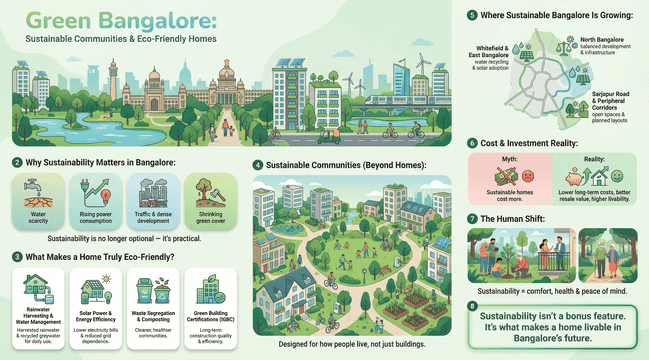
Why Sustainability Matters More Than Ever in Bangalore
Anyone who has lived in Bangalore long enough has noticed the changes—water scarcity during summers, traffic congestion, rising power consumption, and shrinking green cover in certain pockets. These challenges have made sustainability not just an ethical choice, but a practical one.
Homebuyers today aren’t only asking about carpet area or amenities. They’re asking:
- Where does the water come from?
- How is waste managed?
- Is the building energy-efficient?
- Will this home remain livable 10–15 years from now?
This mindset is what’s driving demand for eco-friendly homes across the city.
What Makes a Home Truly Eco-Friendly?
Sustainability in housing isn’t about adding a few plants to a balcony and calling it “green.” A genuinely sustainable home is designed to reduce environmental impact and improve everyday living.
Here are some features commonly seen in eco-friendly homes in Bangalore:
1. Rainwater Harvesting & Water Management
With groundwater levels dropping, rainwater harvesting has become essential. Many sustainable communities now rely heavily on harvested rainwater and recycled greywater for landscaping and flushing.
In areas like Whitefield and Sarjapur Road, projects that invested early in water-management infrastructure are far more resilient during water shortages.
2. Solar Power & Energy Efficiency
Solar panels on rooftops and common areas help reduce dependence on grid electricity. Energy-efficient lighting, ventilation-focused layouts, and insulated walls also lower power consumption—resulting in reduced monthly bills.
3. Waste Segregation & Composting
Communities that manage waste responsibly tend to stay cleaner, healthier, and more self-sufficient. Organic waste composting and dry-waste segregation are now common in many sustainable developments.
4. Green Building Certifications
Projects certified by IGBC or similar green councils adhere to strict sustainability guidelines. These certifications often indicate better long-term construction quality and resource efficiency.
Sustainable Communities: More Than Just Homes
One of the most significant shifts in Bangalore’s real estate landscape is the rise of sustainable communities, not just individual green homes.
A sustainable community looks beyond apartment walls. It focuses on how residents live, interact, and coexist with their surroundings.
Key elements include:
- Preserved green spaces and native trees
- Walkable layouts with reduced internal traffic
- Open parks instead of excessive concrete
- Community gardens and shared green zones
Such communities are increasingly popular among families, professionals working hybrid jobs, and retirees looking for calmer living environments.
Where Is Sustainable Bangalore Taking Shape?
While sustainability is becoming city-wide, certain micro-markets stand out for their conscious
development patterns.
Whitefield & East Bangalore
Despite rapid growth, many newer projects here have integrated advanced water recycling systems and solar infrastructure due to earlier water challenges. This has accelerated the adoption of eco-friendly homes in the region.
Sarjapur Road & Peripheral Growth Corridors
As Bangalore expands outward, developers have more room to plan better. The Rise of Peripheral Bangalore where Larger land parcels allow for open spaces, better drainage, and thoughtfully designed sustainable communities.
North Bangalore
With newer layouts and planned infrastructure, parts of North Bangalore are balancing development and environmental responsibility—making it an emerging hotspot for sustainable living in Bangalore.
Do Sustainable Homes Cost More?
This is one of the most common myths. While initial construction costs may be slightly higher,
eco-friendly homes often cost less to maintain over time: lower electricity bills, reduced reliance on water tankers, and better long-term durability balance out the initial premium.
In fact, many buyers now see sustainability as a form of future-proofing rather than an expense.
The Investment Angle: Sustainability Adds Value
From an investment perspective, sustainability is no longer optional—it’s strategic.
Homes in well-planned sustainable communities tend to:
- Retain value better during market slowdowns
- Attract long-term tenants
- Appeal to environmentally conscious buyers and NRIs
- Face fewer livability issues over time
As awareness grows, sustainable Bangalore projects are likely to enjoy stronger resale demand.
A Human Shift in Homebuying Mindset
There’s also an emotional layer to this transition.
Many homebuyers today grew up in quieter neighbourhoods with trees, playgrounds, and open skies. Sustainability brings back some of that lost balance—without sacrificing modern comfort.
Choosing an eco-friendly home is often less about trends and more about values: health, responsibility, and long-term wellbeing.
How Proppy Helps You Find Sustainable Homes
At Proppy, we go beyond listings.
Our AI-powered platform helps homebuyers identify verified projects, compare sustainability features, and understand which communities are genuinely eco-conscious—not just marketed as such.
By combining data, on-ground verification, and user-centric insights, Proppy makes it easier to navigate the growing landscape of eco-friendly homes in Bangalore and discover communities built for the future.
Whether you’re buying your first home or making a long-term investment, sustainability is a factor worth considering—and Proppy ensures you have the clarity needed to make that choice confidently.
The Road Ahead for Green Bangalore
Bangalore’s growth story is far from over. But the next phase isn’t just about taller buildings or larger layouts. It’s about smarter planning, responsible living, and sustainable choices.
The rise of sustainable Bangalore signals a city learning from its past and preparing for its future.
As more homebuyers prioritise green living, developers will follow—and that’s how meaningful change happens.
Final Thought
Choosing an eco-friendly home isn’t about ticking boxes or following a trend. For most people in Bangalore, it comes down to comfort, reliability, and peace of mind. A home that manages water better, uses energy wisely, and feels breathable year-round makes everyday life easier. These are things you notice only after you move in—and by then, they matter a lot.
As the city continues to grow, homes that are planned responsibly are likely to stand the test of time better than those built with only short-term demand in mind. Sustainability, in that sense, isn’t a bonus feature. It’s part of what makes a home truly livable in Bangalore’s evolving environment.
Buy property in Bangalore with Proppy , the focus has always been on helping homebuyers see beyond surface-level promises. By bringing clarity around verified projects, real data, and long-term value, Proppy helps buyers make decisions that feel right not just today, but years down the line. In a city like Bangalore, that kind of clarity can make all the difference.
Frequently Asked Questions
In Bangalore, a sustainable home usually refers to one that uses water and power responsibly and is planned to handle the city’s environmental challenges. This often includes rainwater harvesting, better waste management, and layouts that reduce energy usage. It’s less about labels and more about how well the home functions in everyday life
Not always. Some eco-friendly homes may come with a slightly higher upfront cost, but many homeowners find that long-term expenses are lower. Reduced electricity bills, less dependence on water tankers, and lower maintenance needs often balance out the initial price difference.
Living conditions in Bangalore have changed over time. Water shortages, rising power costs, and denser neighbourhoods have pushed people to think beyond short-term comfort. Sustainability has become a practical concern tied directly to daily living
Newer developments in parts of East Bangalore, Sarjapur Road, and North Bangalore often include more sustainability-focused planning. These areas usually have better scope for water management systems, open spaces, and efficient layouts
Homes built with long-term livability in mind tend to age better. As awareness grows, buyers are increasingly drawn to properties that are easier to maintain and more resilient, which can positively influence resale demand
Proppy helps homebuyers look beyond marketing claims by offering verified project details and clear comparisons. This makes it easier to identify homes that genuinely support sustainable Bangalore living rather than just promoting green features on paper.
No. Sustainability applies equally to apartments. Even mid-sized residential projects can make a real difference through efficient water use, energy-saving features, and responsible planning.
For many first-time buyers, sustainability becomes important only after moving in. Choosing a home that manages resources well can reduce long-term costs and everyday stress, making it a sensible factor to consider from the beginning
Last modified: January 17, 2026