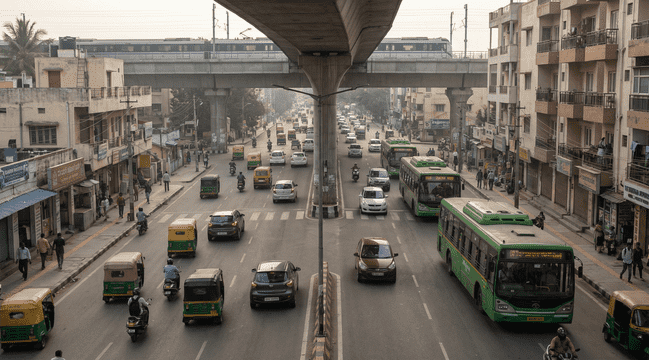
If you’ve lived in Bangalore for a while, you don’t really need anyone to explain why location matters. You feel it every day, usually when you’re running late or stuck somewhere you didn’t expect to be.
Your home here isn’t just where you sleep at night. It affects how early you wake up, how rushed your mornings feel, and how much energy you have left by the time you get back. Some days are manageable. Some days aren’t. Most people figure this out only after living in a place for a few months.
Over time, it becomes clear that the Bangalore commute plays a bigger role in daily life than people initially assume. Not just because of distance, but because travel can be unpredictable. Where you live quietly sets the tone for your routine, whether you realise it immediately or not.
That’s why choosing a location in Bangalore has slowly shifted from being a purely real estate decision to something much more personal. It’s less about what looks good on paper and more about what actually works when you step out every morning.
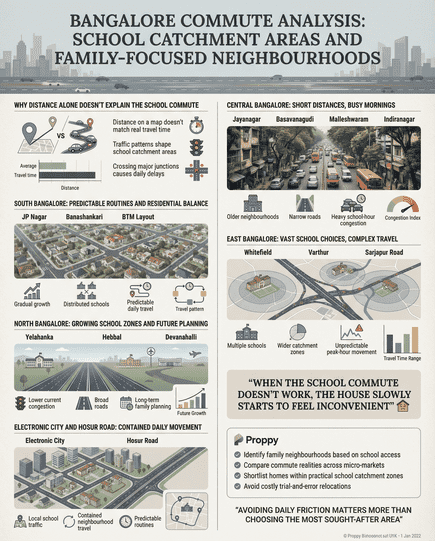
In Bangalore, Distance Means Very Little
One of the biggest misconceptions people carry is that living closer automatically means faster travel. In Bangalore, that logic breaks down almost immediately.
A short distance on the map can feel endless during peak hours. Meanwhile, a longer route with better road flow can feel surprisingly manageable.
Anyone who has tried crossing Silk Board or navigating Outer Ring Road at the wrong time understands this instinctively.
This unpredictability is what makes commuting stressful. You don’t plan your day around traffic — you brace for it.
That’s why transportation accessibility matters more than just proximity.
How Commute Slowly Affects Your Life (Without You Noticing)
Long commutes don’t announce themselves as a problem. They settle in quietly.
You stop exercising regularly. You delay meeting friends. You feel irritated before the day has even begun.
Over months, this becomes routine. People adapt — but adaptation doesn’t mean comfort.
Road Connectivity Is the First Reality Check
Some areas in Bangalore work better simply because they offer options.
- Multiple exit roads.
- Alternate routes.
- Wider junctions.
Others trap you into a single access point. One accident, one breakdown, one poorly timed signal — and your entire morning is delayed.
This is why road connectivity in Bangalore should always be checked during real working hours, not during relaxed site visits.
Public Transport: Not Perfect, But Hard to Ignore Now
For years, public transport in Bangalore was used only when people had no other option. Most preferred their own vehicles, even if it meant sitting in traffic longer. That mindset has started to shift, slowly but noticeably.
The metro, in particular, has changed how people think about daily travel. Areas that are already connected — or even those waiting for a line to open — feel a little more predictable than they used to. You may still face delays, but at least the travel window is easier to estimate.
People who live close to metro stations often talk about small but meaningful changes. They rely less on personal vehicles, plan their days with greater confidence, and feel slightly less drained by the end of the day. It doesn’t remove traffic from the city, but it does reduce the amount you personally have to deal with.
As metro expansion continues at its own pace, locations with reliable access are becoming increasingly practical for everyday living. Over time, this reliability matters more than the convenience promised on paper.
Location Decides How Your Day Begins
A shorter commute doesn’t just save time. It changes your mood.
You wake up calmer. You’re not constantly checking the clock.
Your energy lasts longer into the evening. Living closer to employment hubs like Whitefield, Electronic City, or ORR doesn’t just offer convenience — it provides emotional breathing space.
That’s why homes near IT corridors in Bangalore continue to attract steady interest, even at higher prices. People are paying for predictability.
Peripheral Bangalore: Space Comes With Conditions
Peripheral parts of Bangalore usually attract people for the same reasons. There’s more breathing room, less noise, and homes don’t feel as cramped as they do closer to the city centre. But living farther out also changes how your day works. Travel distances stretch out, sometimes more than expected. Public transport options exist, but they aren’t always reliable or frequent enough to depend on daily. And in many pockets, basic infrastructure is still evolving — roads improve slowly, junctions get reworked, and connectivity takes time to settle. For some people, this trade-off is worth it. For others, it becomes tiring after a few months. The difference usually comes down to how well the location fits their routine, not how good it looks during a site visit.
Work From Home Didn’t Remove Commute Stress
Hybrid work changed expectations, not realities. Most professionals still travel multiple days a week. And when they do, the commute feels heavier because they’ve experienced quieter days at home.
This has shifted priorities.
People now want homes that allow:
- flexible travel
- manageable office days
- less exhaustion when commuting resumes
Even those who don’t commute daily now factor Bangalore commute patterns into their housing decisions.
Why the Same Area Feels Different to Different People
Commute experience is not universal. Someone leaving home at 7:30 am may find an area manageable. Another leaving at 9 am may find it unbearable. Minor timing differences change everything.
This is why broad opinions about locations are often misleading. What matters is how a location fits your routine. Understanding this prevents regret later.
Buyers Are Asking Different Questions Now
Earlier, buyers focused on:
- price
- size
- interiors
Today, questions sound different:
- How long does it actually take during peak hours?
- Is there public transport nearby?
- Are there alternative routes if traffic builds up?
This shift reflects how deeply commute realities in Bangalore influence decisions today.
Why Location Mistakes Are Hard to Undo
Changing a home isn’t easy. Once you move in, you adapt—even if the daily commute drains you. Many people tolerate poor location choices because relocating feels expensive and disruptive.
That’s why choosing wisely upfront matters.
A good location quietly improves life every day without demanding attention.
How Proppy Helps Buyers See the Bigger Picture
This is where Proppy becomes valuable.
Instead of looking at homes in isolation, Proppy helps buyers understand how a location fits in o real daily life.
By focusing on:
- commute practicality
- transportation accessibility
- location flow
Proppy helps reduce guesswork and emotional decision-making.
It’s not about selling faster. It’s about choosing better.
In Bangalore, Location Is About Flow
The best locations aren’t always the most central ones. They’re the ones that allow smoother movement — to work, to school, to essentials, and back home — without constant resistance.
Understanding this difference can change how people experience the city.
Final Thoughts
The Bangalore commute isn’t just a traffic issue. It’s a quality-of-life factor. Where you live determines how much time and energy you have left for yourself every day.
As Bangalore continues to expand, buyers who realistically evaluate how location impacts daily life will always make better decisions.
With the proper understanding and tools, it’s possible to choose homes that support not just ownership but everyday well-being. That’s the difference between living in Bangalore and living well in Bangalore. Proppy Bangalore AI real estate search understands your requirements clearly and fetch the right Home for you. We doesn’t only provide you the exact match for the properties you are looking for but proppy thehand hold you from search to keys.
Frequently Asked Questions:
In Bangalore, commuting affects more than just how long you spend on the road. It influences how your day starts, how tired you feel by evening, and how much personal time you actually have. Over time, long or unpredictable travel can quietly drain energy, which is why many people now prioritise commute convenience while choosing a location.
Not necessarily. In many parts of Bangalore, shorter distances can still take a long time due to traffic bottlenecks, junctions, and peak-hour congestion. In some cases, slightly longer routes with better road flow or public transport access can feel more manageable on a daily basis.
Public transport access has become increasingly important, especially with metro connectivity expanding across the city. Living near reliable bus routes or metro stations can make daily travel more predictable and reduce dependence on personal vehicles. Even for people who don’t commute every day, this flexibility often adds long-term comfort.
Peripheral areas can work well for buyers looking for more space and quieter surroundings. However, they require careful planning. Longer travel distances, limited transport options, and developing infrastructure can affect daily routines. These locations tend to suit people who understand the trade-offs and plan their commute realistically.
The impact usually shows up gradually. Longer or stressful commutes can reduce time for rest, exercise, and social life. Over months and years, this can affect overall well-being. That’s why many buyers now consider commute comfort as part of their lifestyle planning, not just a practical concern.
Metro connectivity helps, but it isn’t the only factor. The ease of reaching the station, last-mile connectivity, and the crowding of routes during peak hours all matter. A location works best when metro access is combined with good road connectivity and nearby daily essentials.
The most reliable way is to observe travel during actual peak hours. Visiting the area at different times of day, checking alternate routes, and understanding public transport availability gives a clearer picture than a single site visit. Talking to current residents can also offer useful insights.
Proppy helps buyers look beyond listings by focusing on how a location fits into everyday life. By providing clarity on commute practicality, transportation accessibility, and neighbourhood dynamics, Proppy supports buyers in making decisions that work not just on paper, but in daily living as well.
Both matter, but location often has a longer-lasting impact. While pricing affects affordability upfront, location influences daily comfort, time management, and long-term satisfaction. Many buyers realise this only after experiencing the commute firsthand.
Yes, in some cases. Infrastructure projects like metro expansion and road upgrades can improve commute patterns, but progress is usually gradual. Buyers should evaluate current conditions while also being aware of realistic future developments, rather than relying only on promises.
Last modified: January 17, 2026