
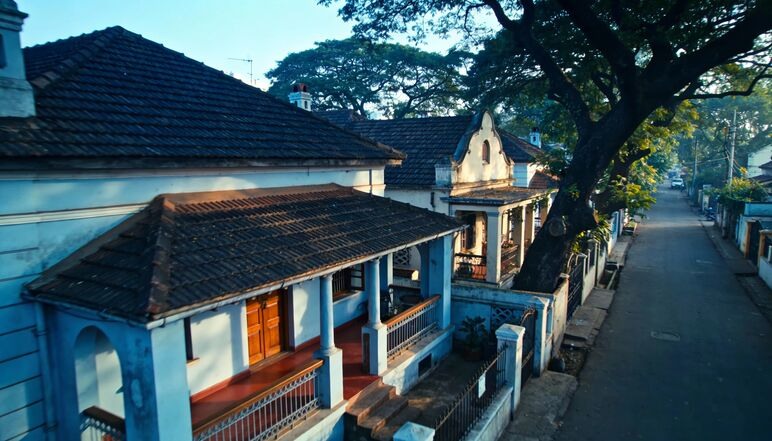
If you grew up in Bangalore or even spent a few years here, you already know this: central Bangalore isn’t just in the middle of the city. It’s the part that still feels like the city many of us remember from childhood — quieter lanes, jasmine-scented evenings, houses with their own personalities, and neighbours who know exactly what time you leave for work.
And somehow, even today, that charm hasn’t vanished. It’s changed, yes… but it hasn’t disappeared.
Over the last year, we at Proppy started noticing something interesting. More buyers — especially families who’ve already lived in different parts of Bengaluru — are now coming back to the old neighbourhoods looking for something specific:
Homes with character. Homes that feel lived-in even before you move in. Homes that remind people of a gentler Bangalore.
This growing interest in heritage properties isn’t nostalgia alone. It’s also about practicality, comfort, long-term value, and, frankly, a desire to live in a place that doesn’t look like every other cement block in the city.
So here’s a closer look — from our experience, from what buyers tell us, and from walking down those streets ourselves — at how character homes in central Bangalore are quietly making a comeback.
Why Central Bangalore Still Pulls People Back
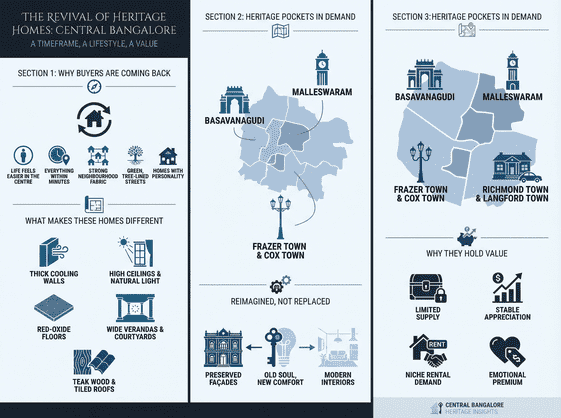
Ask anyone who has rented or bought a house in Basavanagudi, Malleswaram, Frazer Town, Richmond Town, or Cox Town — even after living in “IT corridor hotspots” — they’ll tell you the same thing:
“Life just feels easier in the centre.”
Some reasons are obvious—some things you only understand after living there.
1. Everything is… just closer.
You don’t need Google Maps for every outing. Schools, markets, hospitals, parks — all within a few minutes. This convenience is hard to match, even in the best-planned new townships in the suburbs.
2. The social fabric is strong — and old.
Central Bangalore has always had tightly knit communities. Not in an intrusive way. Just… familiar. Safe. Predictable. Many people say this is something money can’t buy today.
3. You don’t lose the greenery.
Everyone thinks that only the suburbs have green spaces. But walk through Malleswaram 8th Cross early in the morning, or take a stroll behind Gandhi Bazaar, and you’ll see century-old trees framing entire streets.
4. Heritage architecture adds real personality.
Not everyone wants the glass-and-steel look. A lot of buyers prefer a house with a story — and many old houses have plenty of it.
This blend of emotion + practicality is what keeps central Bangalore in demand even today.
What Makes Heritage Homes Unique Today
Most heritage homes in Bangalore were built long before real estate became a business. People built personal homes, not “properties”, which is why these houses feel so different.
Some features buyers specifically look for now:
- Thick walls that keep the house naturally cool
- High ceilings that make rooms feel airy
- Red-oxide floors (many people specifically want them today!)
- Wide verandas
- Mangalore-tiled sloping roofs
- Burma teak doors and beams
- Inner courtyards and shaded sit-outs
These aren’t architecture “features.” They’re comfort features.
Why this matters now
Modern apartments are efficient but also very standardised. A heritage home feels — and is — crafted, not manufactured. For many Bangalore families, this difference matters more than granite countertops or clubhouses.
Top Heritage Districts Homebuyers Ask Us About (Based on Actual Proppy Requests)
Basavanagudi
One of Bangalore’s oldest planned areas. Gandhi Bazaar, DVG Road, and Bull Temple Road — all still feel like a slice of classic Bengaluru.
Buyers here usually want:
✔ Independent character homes
✔ Larger plots
✔ Close-knit community feel
Pricing is premium, but supply is minimal.
Malleswaram
There’s a reason so many Bengaluru icons (writers, musicians, scientists) have lived here.
It’s peaceful, cultured, and wonderfully walkable.
Buyers love:
✔ 100+ year-old houses
✔ Canopied lanes
✔ Heritage markets
✔ Proximity to metro + workplaces
Malleswaram continues to appreciate steadily because inventory levels barely rise.
Cox Town & Frazer Town
More cosmopolitan, more colonial influence, more charm.
Here, the typical heritage homes include:
✔ Bungalows with arches
✔ Indo-Sarcenic details
✔ Large verandas
✔ Old-world layouts
Many expat tenants prefer these pockets too, which keeps rental demand high.
Richmond Town, Langford Town
Closer to MG Road and yet surprisingly calm if you turn into the inner lanes.
Buyers usually look for:
✔ Restored colonial bungalows
✔ Mixed-use potential
✔ Boutique homes
These neighbourhoods carry a rare combination of old charm + modern convenience.
How Heritage Homes Are Being Reimagined (Not Just Renovated)
This is where things get interesting. Buyers today want the soul of an old home, but not its plumbing or wiring.
So what’s happening now is a balanced restoration approach:
Modernising the inside:
- Better electrical lines
- Smart lighting + security
- Modular kitchens
- Modern bathrooms
- Waterproofing & structural reinforcement
Keeping the outside authentic:
- Original façade
- Wooden structures, where possible
- Red-oxide polishing
- Preserved windows & tiled roofing
This “adaptive restoration” retains nostalgia without compromising safety or comfort.
At Proppy, we’ve seen buyers fall in love with a home literally in the first five minutes simply because it “felt right.” That emotional connection is stronger with heritage homes than with new apartments.
Investment Angle: Why These Homes Hold Strong Value
Because supply can never be increased, heritage properties in central Bangalore have a natural demand curve working in their favour.
Key investment points:
✔ Land value grows consistently
These are some of Bangalore’s most expensive PIN codes — and demand stays high regardless of market cycles.
✔ Rental interest from niche tenants
Boutique offices, creative professionals, expatriates, and even homestay operators specifically seek character homes.
✔ Long-term appreciation stays stable
Heritage pockets rarely fluctuate wildly. They’re considered “safe” real estate zones.
✔ Emotional premium
People don’t buy these homes just for ROI. They buy for belonging. For many families, that’s worth paying extra.
What Buyers Should Check (Based on Real Cases We’ve Seen at Proppy)
Heritage homes require careful evaluation. We always encourage:
- Structural inspection
- Legal lineage verification
- Condition of teak wood, roofing, and beams
- Water lines & sewage updates
- Zoning/heritage restrictions
- Feasibility of extensions
- Parking adjustments
Because every old home is different, due diligence becomes even more important. This is where Proppy’s guidance becomes genuinely helpful — not theoretical, but practical.
How Proppy Helps Homebuyers Navigate Heritage Districts
Most real estate platforms show listings. Proppy focuses on discovery, clarity, and local understanding.
For buyers exploring homes in central Bangalore, we help with:
- Curated property options that match lifestyle
- Verified documentation
- On-ground insights about each street (yes, it matters!)
- Past price trends + future appreciation indicators
- Negotiation support
- Restoration feasibility discussions
- Transparent walkthroughs of pros & cons
We don’t romanticise a property just because it looks beautiful. We tell you the strengths and limitations — because buying a heritage home is a commitment, not just a purchase.
The Real Truth About Heritage Living
Living in one of these homes isn’t like living in a standard apartment. It’s quieter, more personal and always gratifying.
People choose them because:
- They want space
- They want natural light
- They want a neighbourhood with personality
- They want something that feels rooted
- And mostly they want a home that feels like “the old Bangalore we once knew”
And the best part? These homes, when restored sensitively, deliver both comfort and long-term value.
In Closing
Central Bangalore’s heritage pockets are not just surviving; they’re becoming relevant again. Younger buyers, older families, returning NRIs — everyone is expressing renewed interest in living somewhere meaningful rather than merely convenient.
Whether you’re looking for an independent bungalow, a restored colonial structure, or a family home, the heritage zones of central Bangalore offer a living experience that modern projects cannot recreate.
And with Proppy guiding the search, the process becomes far less overwhelming and far more informed.
Frequently Asked Questions
Because they offer charm, space, and a familiar old-Bangalore lifestyle that modern buildings can’t replicate.
They can be, mainly because land in central Bangalore is limited. But the value usually matches the location and character.
Only if they haven’t been updated. Once basic repairs are done, maintenance is similar to any independent house.
Yes, easily. Most buyers upgrade interiors while keeping the original look intact.
Yes — as long as structural and legal checks are done. Many older homes are built extremely strong.
Only on officially listed heritage structures. Most character homes can be renovated freely.
Basavanagudi, Malleswaram, Frazer Town, Cox Town, Richmond Town, and Langford Town
Yes. Expats and boutique businesses often prefer them and pay well for unique spaces
Definitely. Land value in central Bangalore grows steadily and heritage homes hold emotional value too.
Proppy verifies documents, checks the home’s condition, guides renovation feasibility, and shortlists the right properties
Last modified: January 17, 2026

[…] Traffic builds up quickly in these areas, especially around school hours. Roads are narrower than those in newer parts of the city. Parking near the school gates is limited. Even a single school bus stopping for a few minutes can slow down an entire stretch. Parents who move into Central Bangalore from other parts of the city often realise this only after settling in. Read our Central Bangalore real estate insights […]
[…] Peripheral areas offer something different—room to grow. Read Central bangalore insights […]
[…] However, the challenge here isn’t water — it’s availability. New residential projects are limited, plot sizes are smaller, and entry prices are high. From a long-term perspective, though, properties here continue to command strong demand due to dependable infrastructure. Homes that feel lived-in even before you move in. Homes that remind people of central Bangalore […]